Change your stored postcode to update prices for your location.


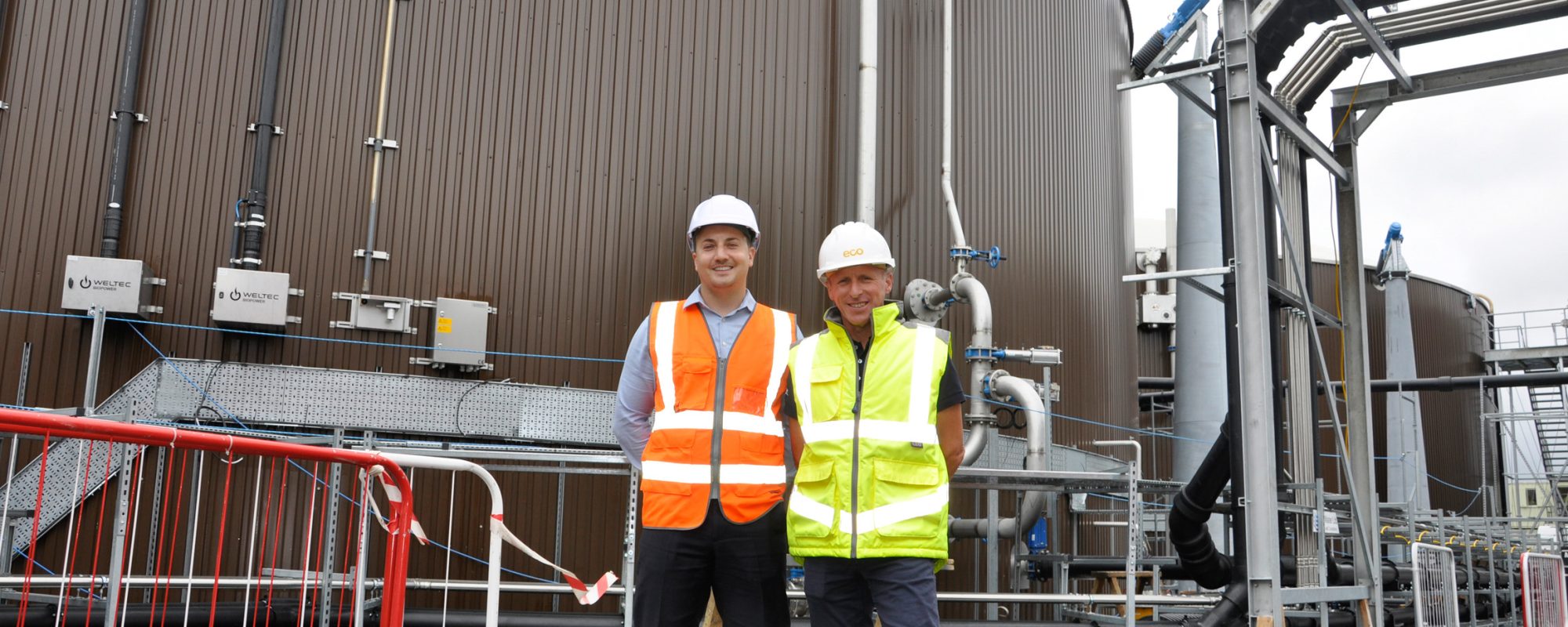
More of our food waste to be turned into renewable energy in new commercial tie-up
Two long-established companies on the South Coast have launched a commercial partnership to increase the amount of renewable energy generated by the food we throw away.
Hampshire-based TJ Waste & Recycling, the waste management arm of bulk and aggregates haulier TJ, joined forces with Dorset’s Eco Sustainable Solutions, an organic recycling and renewable energy company, for the special service.
The tie-up sees Eco providing a food waste transfer point at TJ’s materials recovery facility in Yapton, near Bognor Regis, in West Sussex.
Third-party waste collection organisations, such as commercial operators and local authorities, can offload food waste at the site, with specialist equipment and handling arrangements in place.
Food waste will then be transferred by TJ’s trucks to Eco’s anaerobic digestion (AD) plant in Piddlehinton, near Dorchester, Dorset – the facility has already prevented 240,000-plus tonnes of carbon emissions and generated 91,000 MWhs (Megawatt hours) in green gas-powered electricity.
Last year nearly 37,000 tonnes of food waste were processed at the site.
A larger AD plant by Eco, at Parley, near Bournemouth Airport, is due to be fully operational early next year and will also be taking the TJ-transported food waste. It will be capable of handling 50,000-plus tonnes of food waste annually, producing around 60GWhs (Gigawatt hours) of biomethane, equivalent to the energy needs of 5,300 medium-sized homes.
Luke Haskell, a director at TJ Waste & Recycling, headquartered near Portsmouth, said: “Industry figures showing that we in the UK waste a staggering 10.7 million tonnes of food annually, with six million tonnes of that caused by households.
“TJ’s partnership with Eco will help increase the amount of green power generated by food waste here on the South Coast – and new recycling legislation is a driving force for the tie-up.
“The Simpler Recycling legislation (Environment Act 2020) mandates a timeline for the segregation of food waste for eligible businesses and households, effective from April this year, meaning a significantly higher volume in food waste collections.
“By combining complementary assets and experience, TJ and Eco are providing much-needed infrastructure for sustainable resource management.”
Peter Hardy, Eco’s Sales Director, said: “Efficient food waste recycling can deliver huge benefits for businesses, the local environment, and long-term sustainability.
“We’re pleased to be working with TJ on this initiative, offering a much-needed new service on the South Coast.”
According to food waste industry figures, most food waste by weight comes from households (60%), followed by farms (15%), manufacturing (13%), hospitality and food service (10%) and retail (2%).
A House of Commons research paper on the issue also highlighted the environmental impact: “WRAP estimated that the greenhouse gas emissions associated with wasted food and drink in the UK accounted for approximately 18 million tonnes of CO2 equivalent in 2021 and 22.
“The foods that led to the highest greenhouse gas emissions from households were meat and fish, followed by whole meals, fresh vegetables and salads, and dairy and eggs.”
WRAP is the Waste & Resources Action Programme, a climate action non-governmental organisation.
Based on figures by WRAP, every day in UK homes we waste:
• 1,300 tonnes of potatoes, equivalent to 8.2 million potatoes
• 190 tonnes of carrots, equivalent to 3.5 million carrots
• 130 tonnes of bananas, equivalent to 1.1 million bananas
• 130 tonnes of tomatoes, equivalent to 1.6 million tomatoes
• 190 tonnes of apples, equivalent to 1.3 million apples
• 46 tonnes of oranges, equivalent to 410,000 oranges
• 81 tonnes of onions, equivalent to 820,000 onions
• 50 tonnes of ham, equivalent to 2 million slices of ham
• 960 tonnes of bread, equivalent to 24 million slices or 1.2 million loaves
• 2.3 million glasses of milk




Change your stored postcode to update prices for your location.